Financial services case study
Financial services platform and salary-sacrifice calculator
A regulated financial-services website and salary-sacrifice calculator, refined across desktop and mobile during late-stage delivery. I updated selected components and the calculator to align with Aegon’s identity and brand, and supported UAT within an Agile Scrum team ahead of release.
- Role
- Senior UI Designer
- Focus
- Financial education and brand alignment
- Format
- Responsive web case study
Overview
Making a complex employee benefit easier to understand
The wider service needed to explain a complex employee benefit in plain language and guide employers and employees towards relevant next steps.
The project was already well advanced when I joined, so my role was not to redefine the entire product. I quickly learned the established patterns, identified inconsistencies and usability risks, and made focused improvements within the existing design system, delivery plan and technical implementation.
My role
Refining the experience within an established product
- UI refinement of selected production components
- Updating the salary-sacrifice calculator to align with Aegon’s identity and brand standards
- Responsive layout and component review
- Visual consistency against established design-system patterns
- Review of interaction states and error handling
- Identification and documentation of UAT issues
- Collaboration with product owners, engineers and project managers within an Agile Scrum team
- Verification of fixes before release
Design approach
Clear hierarchy, plain-language content and direct routes to action
Joining late in delivery required a different kind of design judgement from leading an early-stage concept. I needed to understand the existing system quickly, distinguish between critical issues and lower-priority polish, and recommend improvements that were realistic within the remaining delivery constraints.
Working within constraints
Improving the interface without destabilising established journeys or delivery commitments.
Prioritising user impact
Focusing attention on clarity, interaction states, responsive behaviour and areas involving complex financial information.
Collaborating through delivery
Working with product owners, engineers and project managers through the Scrum process to reach practical resolutions.
Responsive website
A wider website experience that works across desktop and mobile
The website experience needed to communicate the broader service proposition clearly across devices. I reviewed how hierarchy, content, navigation and calls to action translated from desktop to mobile so the experience remained clear, readable and easy to act on.
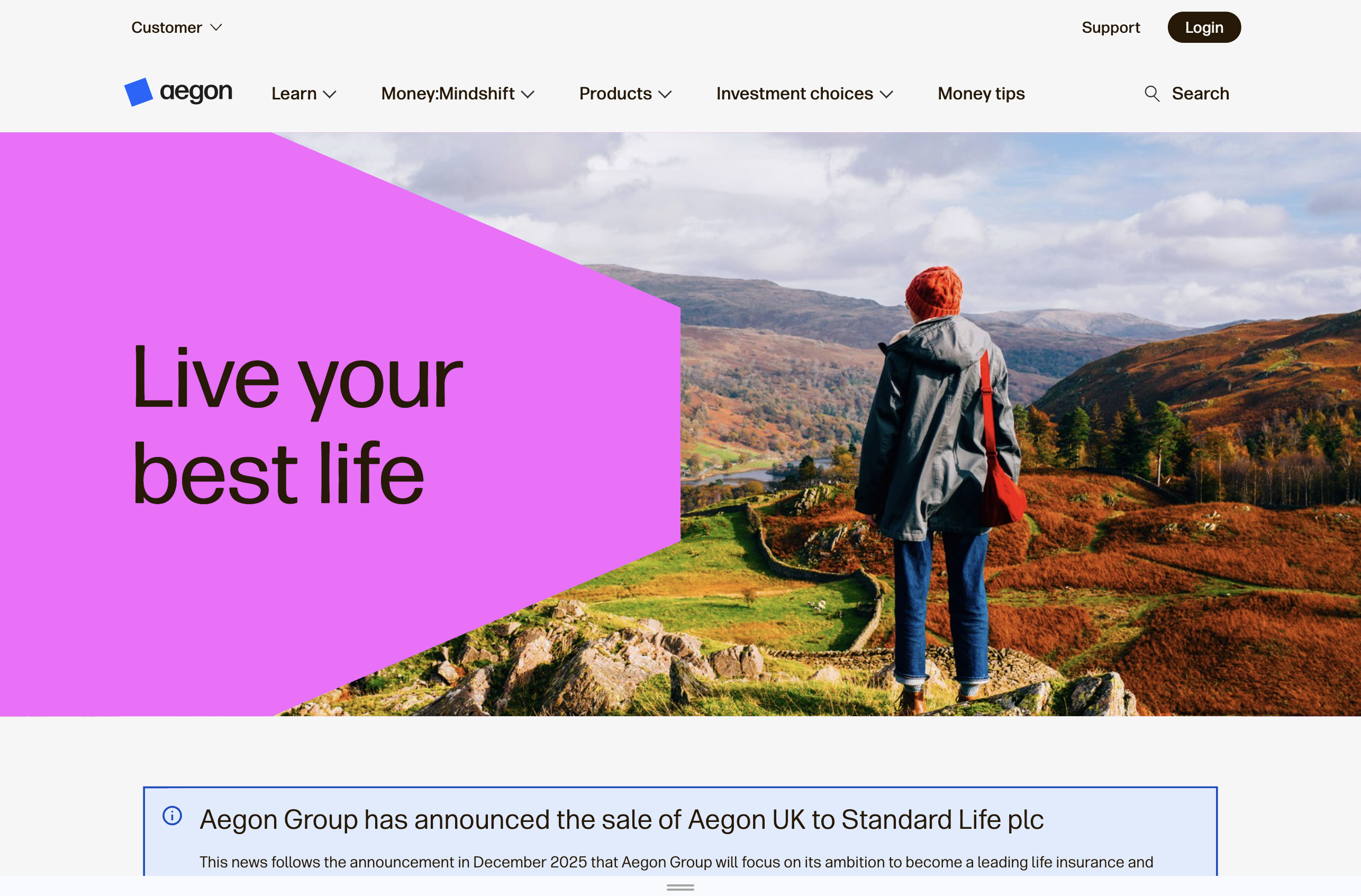
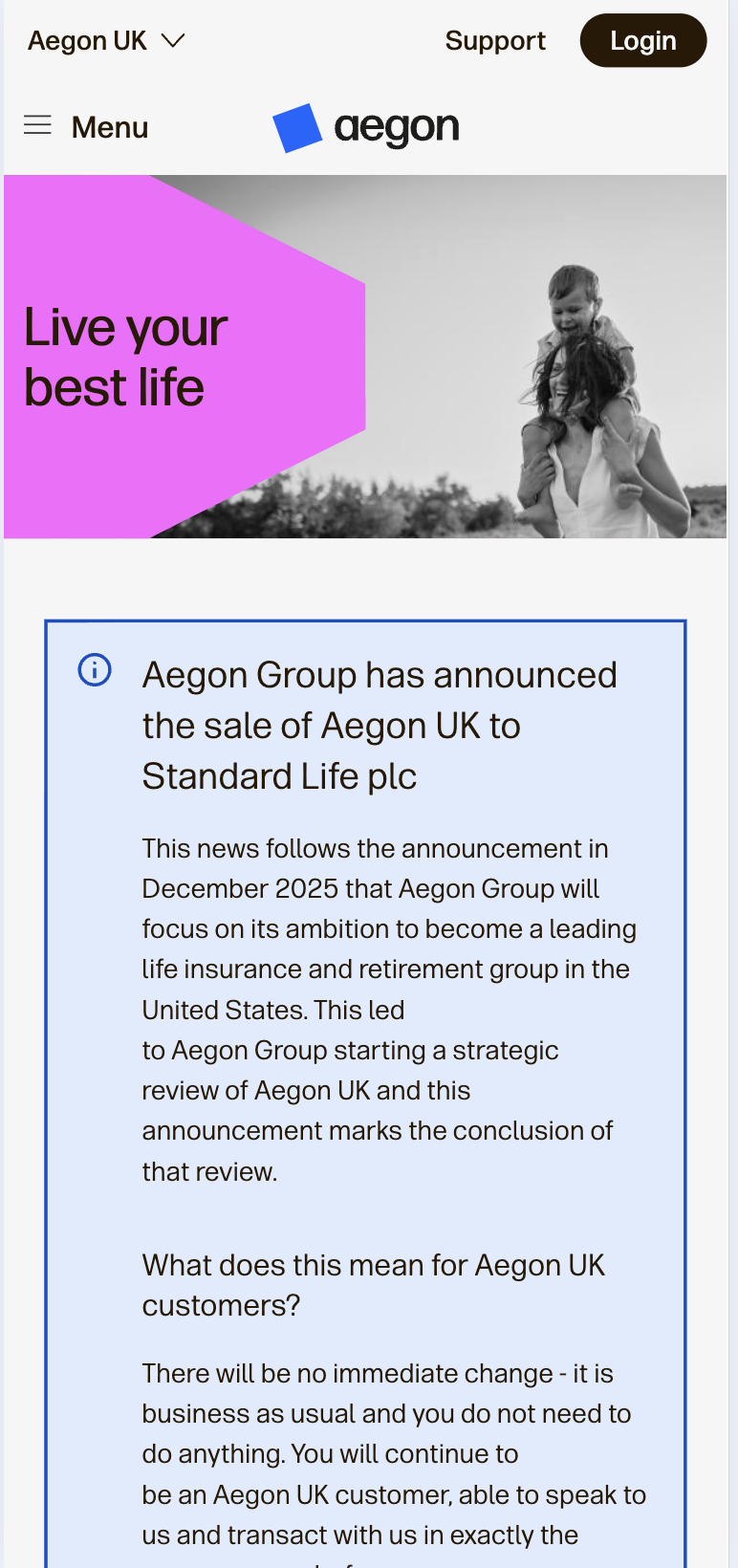
- Simple page hierarchy that supported scanning and comparison
- Plain-language content and guidance for a complex financial proposition
- Responsive layout patterns that kept key content readable on smaller screens
- Calls to action that supported exploration without forcing commitment too early
Salary-sacrifice calculator
Helping users understand potential savings with a focused calculator flow
The calculator enabled users to enter salary information and see potential savings generated through salary sacrifice. The experience needed to make a financial calculation feel simple and accessible while maintaining clarity and confidence.
My role was to update the interface and ensure it aligned with Aegon’s identity, brand standards and established component patterns. I reviewed the presentation of guidance, inputs, validation and calculated outcomes across desktop and smaller screens.
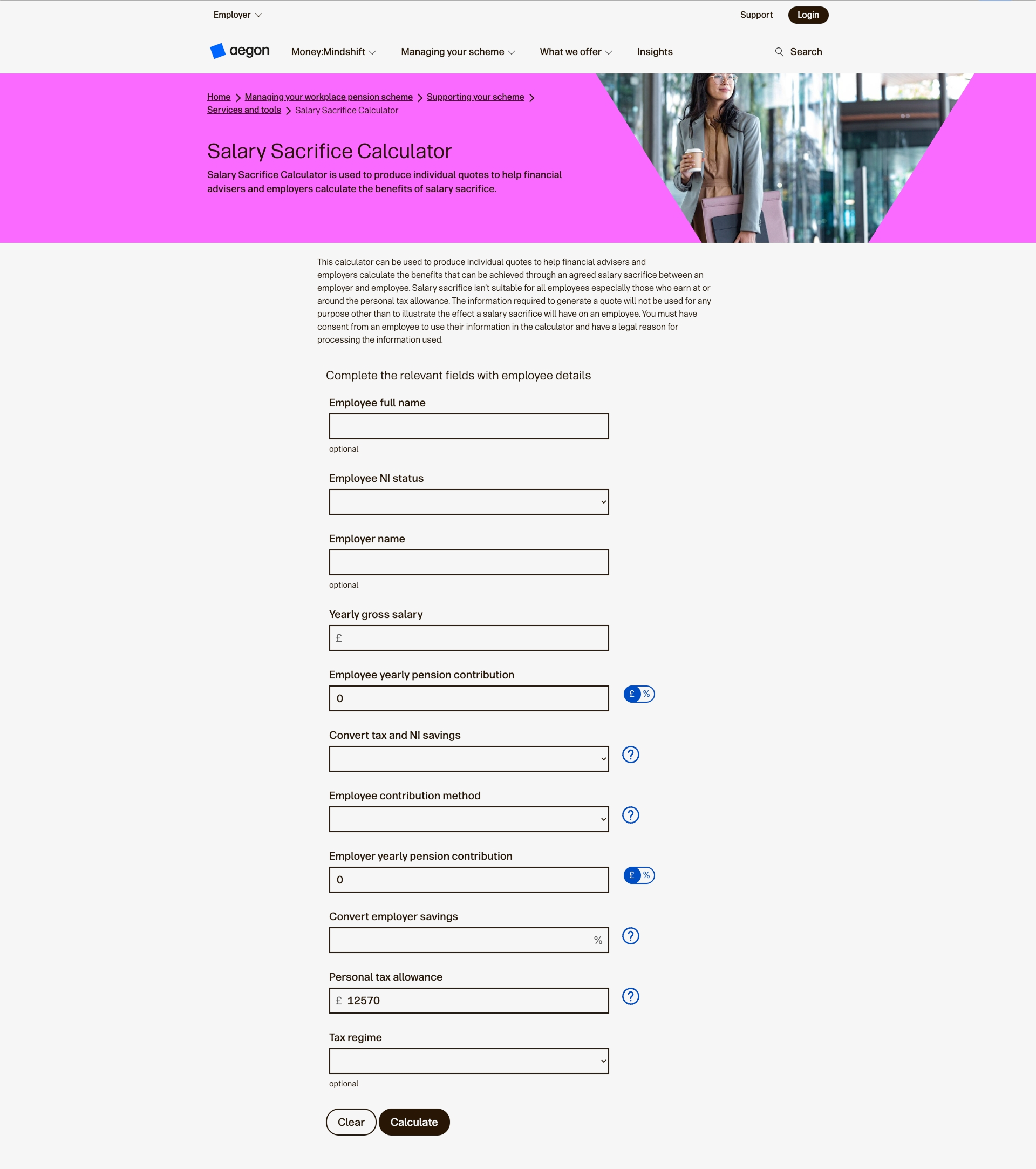

- Alignment with Aegon’s identity and visual brand standards
- Consistent typography, spacing and component styling
- Clear visual hierarchy between guidance, inputs and outcomes
- Consistent validation and interaction states
- Responsive behaviour on smaller screens
- Alignment with established design-system patterns
Agile delivery
Maintaining design quality through collaborative UAT
A significant part of my contribution involved reviewing the implemented website during UAT as part of an Agile Scrum team. I worked alongside product owners, engineers and project managers to assess the interface across pages and screen sizes, compare the implementation with the intended design and identify issues that could affect clarity, consistency or usability.
- Review the implemented page or component within the delivery cycle
- Compare it with the approved design, Aegon brand standards and established UI patterns
- Record the issue clearly with supporting context
- Prioritise issues with the team based on user impact and severity
- Discuss practical fixes with product owners, engineers and project managers through the Scrum workflow
- Recheck the implementation after changes were made
This collaborative process helped maintain design quality during delivery and supported the team in resolving issues before release.
Wider platform context
A high-traffic service with sustained use
- 13%Increase in average time on site between 2024 and 2026
- 4%Increase in average monthly visits between 2024 and 2026
These figures describe overall website trends and are included to illustrate the scale and continued use of the live service. They should not be interpreted as changes caused by my individual design contribution.
Outcome
Supporting a consistent, brand-aligned release
My contribution supported the final stages of delivery by improving selected production components, updating the salary-sacrifice calculator to align with Aegon’s identity and brand, and helping the Agile team identify and resolve UI issues during UAT.
The project demonstrates my ability to contribute effectively within an established product environment, work carefully with regulated financial content and maintain design quality during a pressured delivery phase.
Reflection
What this delivery phase reinforced
- Late-stage design work requires strong prioritisation
- UAT is most effective when it is embedded within the Agile delivery process
- Small component decisions can significantly affect consistency
- Clear issue documentation improves collaboration with product and engineering
- Complex financial interfaces need clear hierarchy, plain-language guidance and well-signposted next steps